
Website design cost in the UK ranges from £500 for a basic DIY build to over £30,000 for a fully bespoke e-commerce platform. For most small businesses in South Yorkshire and across the UK, the realistic budget sits between £2,000 and £15,000, depending on complexity, functionality, and how much strategic input you need. The term “web design pricing” covers everything from a five-page brochure site to a custom-built booking system with CRM integration. Understanding what drives those numbers is the fastest way to avoid overpaying, or worse, underpaying for something that quietly costs you more in the long run.
What factors most influence website design cost in the UK?
The biggest driver of web design pricing is project scope. A five-page brochure site with a contact form is a very different beast from a thirty-page site with a booking engine, live stock feeds, and multilingual support. Agencies price the work, not just the pages.
Here are the core factors that push costs up or down:
-
Number of pages and content volume. More pages mean more design, more development, and more testing time.
-
Bespoke design vs. templates. A custom design built from scratch costs more than adapting a premium WordPress theme. The difference shows in how distinctive your brand looks online.
-
Functionality requirements. Booking systems, e-commerce checkouts, membership portals, and third-party integrations all add development hours.
-
Content readiness. Content production costs are a significant-hidden expense and are often excluded from initial quotes. Supplying your own copy and photography can reduce agency fees substantially.
-
Strategic services. SEO setup, UX research, and conversion rate work turn a website from a digital brochure into a business asset. These services add cost but also add measurable value.
-
Agency size and location. A large London agency carries higher overheads than a regional studio in Sheffield or Rotherham. That overhead shows up in the quote.
Strategy drives cost: the price difference between a £2,000 and a £10,000 quote often reflects strategic effort and experience, not just extra pages. That is worth sitting with before you go hunting for the cheapest option.
Pro Tip: Ask every potential provider to break their quote into line items. If they cannot explain what each line covers, that is a red flag worth taking seriously.

What are the typical web design price ranges for UK small businesses?
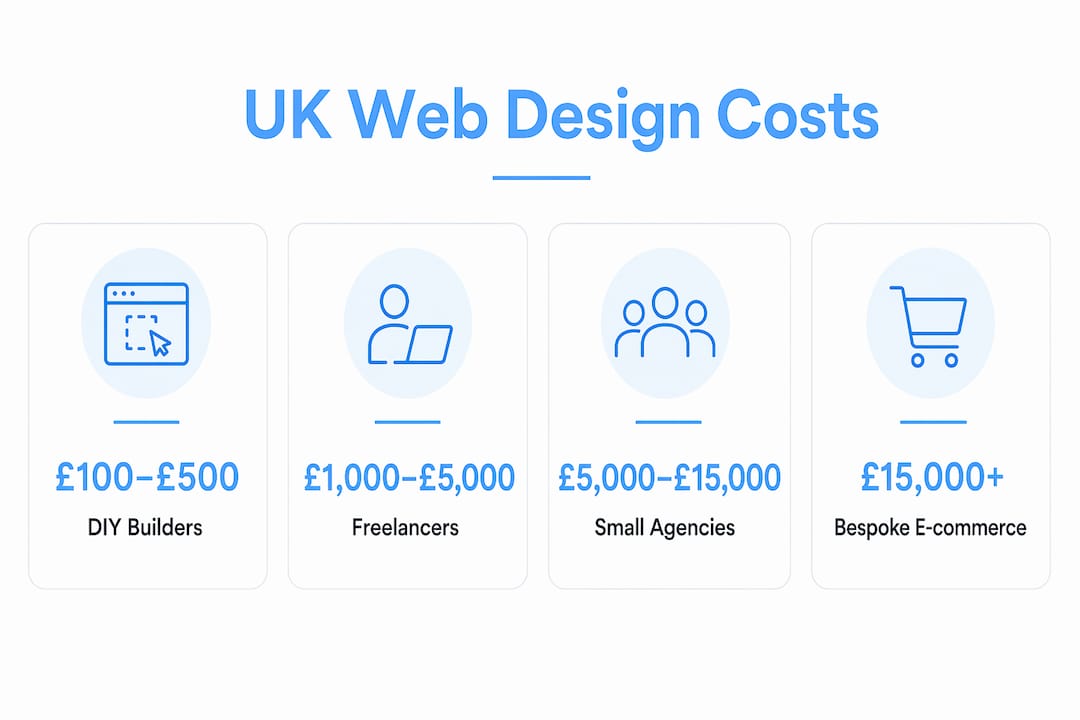
Professional brochure websites for small UK businesses typically cost between £2,000 and £15,000, varying by complexity and features. That range is wide, so here is how it breaks down in practice.
| Website type | Typical cost range | Typical timeline |
|---|---|---|
| DIY builder (Squarespace, Wix) | £100–£500 per year | 1–2 weeks |
| Starter brochure site (template-based) | £1,000–£5,000 | 3–5 weeks |
| Custom WordPress site (mid-range) | £5,000–£15,000 | 6–10 weeks |
| E-commerce site | £8,000–£30,000+ | 10–20 weeks |
| Fully bespoke build | £15,000+ | 12–20+ weeks |
Project timelines correlate with cost: starter sites take 3–5 weeks, mid-range builds 6–10 weeks, and complex projects 10–20 weeks. That timeline matters for your planning, especially if you have a product launch or seasonal peak coming up.
DIY builders like Squarespace and Wix sit at the low end of UK website development costs. They are genuinely useful for sole traders testing an idea, but they come with real limitations. You own very little of what you build, your SEO options are restricted, and the moment you need something custom, you hit a wall.
A starter brochure site from a freelancer or small agency in the £1,000–£5,000 range suits a local trades business, a therapist, or a café that needs a clean, professional presence without complex functionality. Mid-range custom WordPress builds in the £5,000–£15,000 bracket suit growing businesses that need a site built around their brand, with room to add features over time. E-commerce and bespoke projects above £8,000 are for businesses where the website is a primary sales channel.
Pro Tip: If a quote comes in well below the typical range for your project type, ask what has been left out. Scope gaps are the most common reason websites go over budget.
What ongoing costs should UK small businesses budget for after launch?
The launch price is not the total price. Annual ongoing costs for UK websites include hosting (£100–£600), domain renewals (£10–£30), and maintenance plans (£300–£2,000). Those numbers add up, and ignoring them leads to nasty surprises six months after go-live.
Here is what to budget for after launch:
-
Hosting. Shared hosting sits at the cheaper end. Managed WordPress hosting or a dedicated server costs more but delivers better speed and security. Expect to pay £100–£600 annually depending on your setup.
-
Domain registration and renewal. A .co.uk domain typically costs £10–£15 per year. Premium or short domains cost more.
-
Maintenance plans. These cover software updates, security patches, and backups. Skipping maintenance is the equivalent of never servicing your car. A basic plan runs from £300 per year; a full-service plan can reach £2,000.
-
Premium plugins and licences. Many WordPress sites rely on paid plugins for forms, SEO, page builders, and e-commerce. Budget £100–£500 annually for these.
-
SEO and digital marketing. A website with no ongoing SEO investment is a brochure nobody reads. Monthly SEO retainers for small businesses typically start from £300–£500 per month.
Overly complex, plugin-heavy WordPress setups drive up monthly maintenance and hosting fees unnecessarily. A leaner build with fewer dependencies costs less to run and is easier to keep secure.
Pro Tip: Ask your agency or developer for a written breakdown of expected annual running costs before you sign off on the build. A good provider will give you this without being asked.
How to choose the right website option for your budget and goals
Matching your website to your business stage is more useful than chasing a price point. Here is a practical framework for making that decision.
-
Map your budget to your business maturity. A sole trader just starting out does not need a £10,000 custom build. A Squarespace site or a starter WordPress theme gets you online quickly and cheaply. A business generating consistent revenue and looking to grow online needs a site that can carry that weight.
-
Weigh the DIY vs. freelancer vs. agency trade-off honestly. DIY builders save money upfront but cost time and limit growth. Freelancers offer good value for straightforward projects but may lack the strategic depth or capacity for complex builds. Agencies bring process, accountability, and broader expertise, which is why they cost more.
-
Prioritise strategic services if growth is your goal. Cheap template-based sites often lack essential SEO, accessibility, and ongoing support, raising long-term costs. A site that ranks well and converts visitors is worth more than a pretty site that nobody finds.
-
Demand transparent, line-item quotes. Pricing transparency is a major red flag indicator. A provider who cannot explain their pricing clearly is unlikely to manage your project clearly either.
-
Ask the right questions before you commit. Find out who will actually build your site, what happens if you need changes after launch, whether hosting is included, and what the handover process looks like. These questions separate professional providers from those who disappear after payment.
-
Watch for hidden costs. Content production, stock photography licences, third-party software subscriptions, and post-launch training are all commonly excluded from initial quotes. Factor them into your total website design budget before you sign anything.
Key takeaways
The most cost-effective website investment for a UK small business balances upfront build quality, realistic ongoing costs, and strategic services that drive measurable growth.
| Point | Details |
|---|---|
| Cost range is wide | UK small business websites typically cost £1,000–£15,000 depending on scope and complexity. |
| Scope drives price | Pages, functionality, and strategic services are the biggest cost variables in any quote. |
| Ongoing costs matter | Budget £500–£3,000 annually for hosting, maintenance, plugins, and domain renewal. |
| Transparency signals quality | A provider who itemises costs clearly is far more likely to deliver on time and on budget. |
| Cheap sites cost more long-term | Template sites without SEO or support often require expensive fixes or full rebuilds within two years. |
What I have learned about website pricing after years in the industry
The question I hear most often from business owners in South Yorkshire is some version of: “Why does one agency quote me £2,000 and another quote £12,000 for what sounds like the same thing?” The honest answer is that they are not quoting the same thing, even if the brief looks identical on paper.
Low quotes often reflect productised sprint models, where a provider uses a tight, repeatable process to deliver a quality site quickly. That is not a bad thing. Higher quotes often reflect discovery workshops, prototyping, project management layers, and agency overheads. Understanding the build methodology helps you set realistic expectations about what you are actually buying.
What I would tell any business owner is this: the lowest price is rarely the lowest cost. A £1,500 site that ranks nowhere, loads slowly, and needs rebuilding in eighteen months has cost you far more than a £5,000 site that works properly from day one. I have seen this play out too many times to count.
The rise of productised sprint models is genuinely good news for small businesses. It means you can now access quality web design at a lower entry point than was possible five years ago, without sacrificing the strategic thinking that makes a site perform. The key is knowing what questions to ask and what answers to trust.
My practical advice: treat your website as a business investment, not a one-off purchase. Budget for it properly, ask for itemised quotes, and choose a provider who can explain their process in plain English. If they cannot do that, keep looking.
— Chris
Ttoydigital’s web design services for UK small businesses
Budgeting for a new website is much easier when you know exactly what you are getting for your money.
Ttoydigital works with small businesses across South Yorkshire and the wider UK, offering web design services built around transparent pricing and a genuine focus on business growth. Whether you need a clean brochure site, a WordPress build with SEO baked in, or a more complex platform, the team at Ttoydigital will give you a clear, itemised quote with no vague line items. The approach is strategy-led, which means every site is built to perform, not just to look good. If you want to understand what a website investment could realistically look like for your business, the Ttoydigital website is a good place to start.
FAQ
How much does a website cost for a small business in the UK?
A small business website in the UK typically costs between £1,000 and £15,000, depending on the number of pages, design complexity, and functionality required. DIY builder subscriptions start from around £100–£500 per year.
What is included in a typical web design quote?
Most professional quotes cover design, development, and basic testing. Content production, SEO setup, hosting, and post-launch support are commonly excluded and should be confirmed in writing before you sign.
How long does it take to build a small business website in the UK?
Starter sites typically take 3–5 weeks, mid-range custom builds take 6–10 weeks, and complex or e-commerce projects take 10–20 weeks from brief to launch.
What ongoing costs should I expect after my website launches?
Annual running costs typically include hosting (£100–£600), domain renewal (£10–£30), and a maintenance plan (£300–£2,000). SEO and marketing spend sits on top of these figures.
Is it worth paying more for a professional agency over a freelancer?
An agency provides strategic thinking, project management, and accountability that a solo freelancer may not. For straightforward builds, a freelancer offers good value. For growth-focused businesses, the additional investment in an agency typically pays for itself through better performance and fewer post-launch problems.